
The Library of Virginia and Backstage Library Works have been working together in recent years to tackle a reference collection stored on microfilm. Not only does the collection need to be duplicated, but the index is being updated at the same time, migrated from old, occasionally incomplete records into the Commonwealth’s ShelfLife database.
While the LVA team will be adding some of the deeper metadata elements, Backstage has been using the information that’s gathered during reel processing to input new records into ShelfLife. Like an inventory review, the result will be a complete database of all microfilm that exists in the collection as well as the peace of mind that the records contained therein will be preserved for centuries to come on stable film.
Diseased Duplication
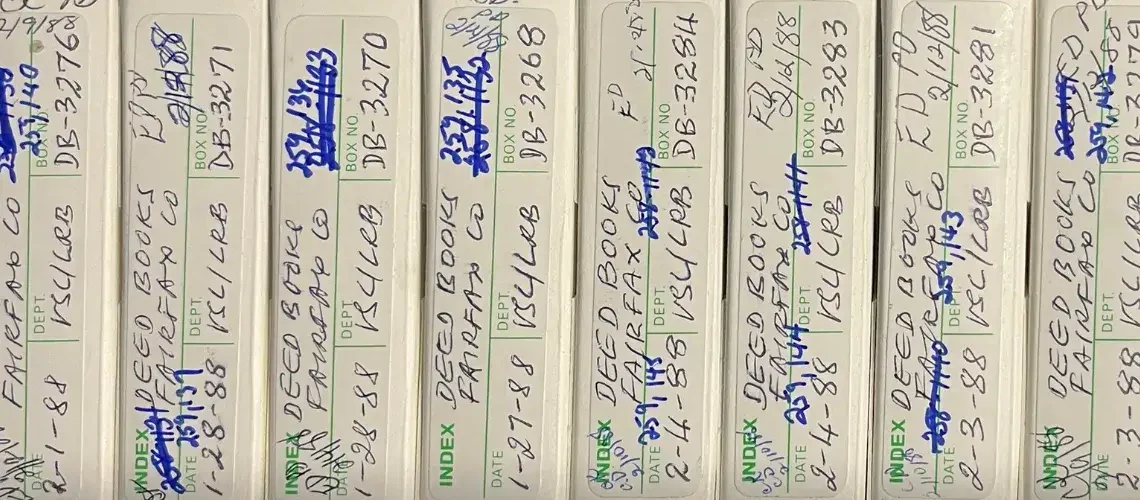
Cemetery records, veterans’ lists, deed and will books, and many other forms of legal documentation besides. With documents going as far back as the 1700s, LVA’s microfilm collection is extensive. Tens of thousands of reels are slated to be processed over the course of the project with a little less than 35,000 duplicated to date. Of these, approximately 10,000 have been evaluated for ShelfLife.
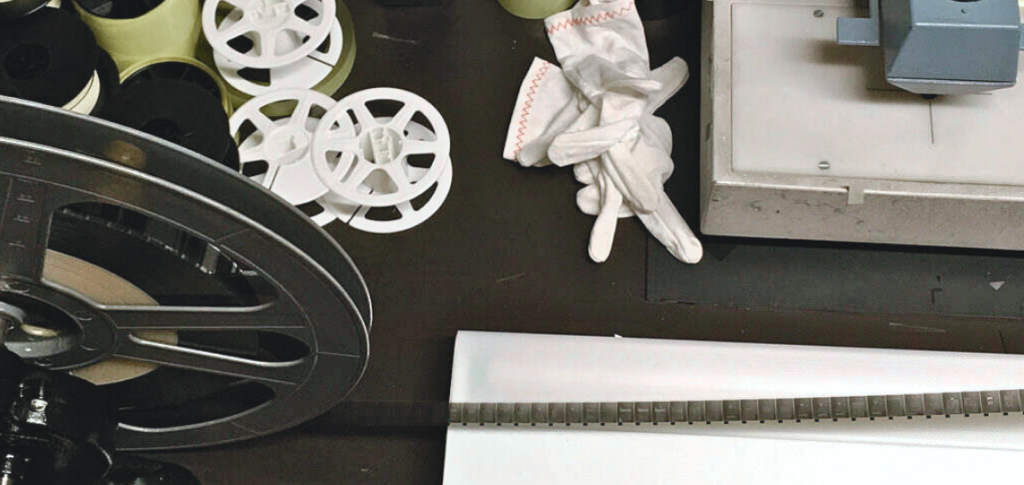
The microfilm collection is a mixture of acetate and polyester film, in 16mm and 35mm, and with a very small volume arriving inside cartridges—a format neither LVA nor Backstage expected. All acetate films must eventually be duplicated to polyester because it is not an archival storage medium. Additionally, a portion of LVA’s polyester microfilm has suffered from redox, a condition which will permanently affect legibility as loose metallic silver particles in the image emulsion oxidize. As redox is not reversible, these reels require duplication as well. Approximately 1,800 reels are processed every two months with 1,000 of those added to ShelfLife in that span of time. The project is scheduled to hit double time with an upcoming shipment.
Microfilm Before RLG
Over two years into the indexing project, the documentation used to input data about the reels is an impressive 36 pages long. The original scope had Backstage’s team transcribing information from reel targets where available: if it has a target, add what’s there and move on. However, the team soon encountered reels that included targets which were little more than microfilmer’s sheets (handwritten pieces of paper with information about the materials jotted haphazardly) or even captures of chalkboard slate where the original microfilmer had made quick notes while scanning.
Modern microfilm is created according to guidelines established by the Research Libraries Group (RLG), a set of instructions that codify how materials should be arranged, described, and targeted for preservation clarity. But older films, especially those which were produced for temporary retention in county and state governments, can be much less regular, subject to the preferences of local offices or even individual microfilmers. “It’s been fascinating to see the standards that were just utterly missing,” commented Tim, who is the coordinator on Backstage’s side for reel indexing. “We’ve seen splices on top of splices in instances where deeds collected through the month were added at once to whatever reel had space at the time. Lots of hands in shots, sometimes there aren’t targets. Once, there was a handwritten note. ‘Thank you, Mr. Miller’ scrawled across two frames of film. I just recently came across another frame where a filmer took a picture of himself. It appears between two sets of materials on a reel.”
Kristin, Eli, and Lori in our darkroom spearhead the duplication side of the project. Tim works alongside one other technician, Nancy, to input data into ShelfLife and maintain some additional reports that will flag objects of interest to the LVA team when they begin their stage of the review. He recalls how these irregularities required the project to pivot. “How much data are we allowed to enter on our end since we don’t have the same background in government encoding as LVA’s archivists?” In time, Tim and LVA’s Imaging Services Quality Assurance Supervisor, Michael LeGrande, have found a balance. Certain keywords in a title string indicate specific steps that should be taken when recording the item in ShelfLife. The details recorded in the secondary reports will aid, and have aided, conversations about how the project is developing and whether the project may benefit from additional funding down the road.
What’s Being Accomplished
Some of the boxes Tim and his team are working on have not been touched in years. “It’s a bit like we’re clearing a path through the jungle,” he remarked. An archivist himself, Tim has been eager to support the indexing project. “How many other institutions have archives with microfilm? And how many have catalog systems that are defunct? How much isn’t accessible? It’s important work, providing access to data, doing the deeper dive to figure out what’s there: what content, how many pages, that sort of thing.”
We asked Tim what the most interesting thing is that he’s come across. “There are a lot of things. But one that sticks out was an ‘Oyster Planting Ground Record Book’. Lots of agricultural records, too, like Federal Farm Credit Liens. It’s just fascinating to see what’s out there.”
What’s in your microfilm collection? To learn more about collection consultations or diseased microfilming, reach out to us at 1.800.288.1265 or send an email to info@bslw.com.