
Of our service areas, which cover authority control, archival processing, cataloging, digitization, and microfilming, we tend to partner with academic libraries on three types of projects in particular.
With a fresh perspective of your collection, future acquisition projects become easier to plan for and you can be more confident in your circulation statistics.
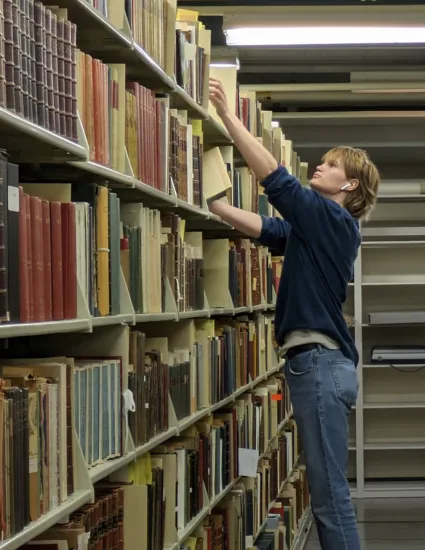
Catalogs of any size, large or small, can benefit from regular inventory review, and it may surprise you to hear that Backstage can perform a collection inventory without shutting down the library or interrupting patrons. We make a copy of your database and check it against every item on your shelves. While we’re at it, we can assist with shifting your collection or weeding it based off of a pull-list/deaccessioning guideline.
At the conclusion of the project, you’ll have a report that shows you what items were missing bibliographic records, and which titles had a bibliographic record but were physically missing. Backstage can provide brief or full-level metadata for these titles.
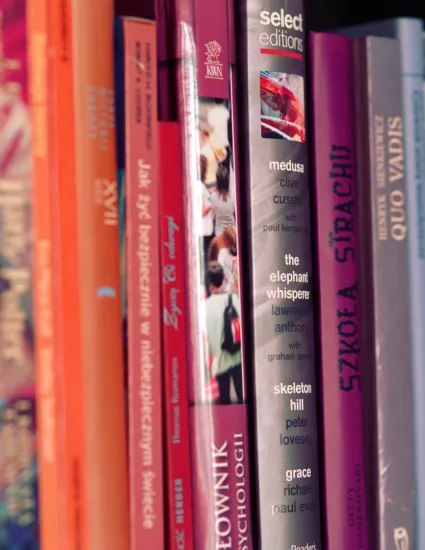
All titles in your collection regardless of language or script can be made findable through rich metadata provided by our cataloging team located around the world.
Academic acquisitions often cover many different languages. Sometimes these are gifted collections that need brief MARC records ahead of a curated exhibition. Other times, the library has ongoing purchasing to support classes. Our projects can accommodate cataloging of multiple languages in a given batch or focus in on a single language, or single format.
Books or digital surrogates are shipped to one of our two offices in Bethlehem, Pennsylvania or Provo, Utah. From there, your dedicated project manager oversees operations, getting your materials into the production queue and arranging for digital copies to be sent to specific librarians who have expertise in the given language. All work falls under our quality guarantee.
While many things today are born-digital, academic libraries are often the caretakers of physical media.
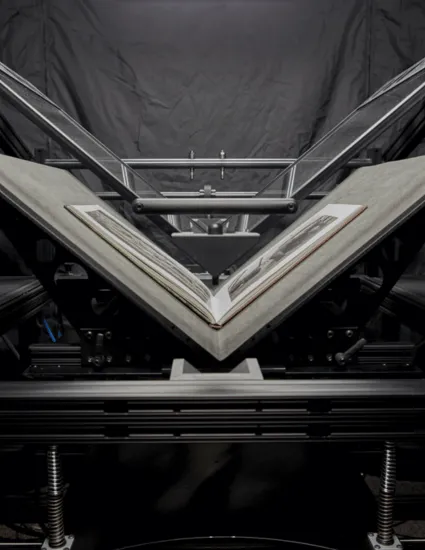
What materials do we tend to see when working with academics? We’ve digitized accumulated centuries of school newspapers and magazines; worked with student records on microfilm, preserved course catalogs. It’s also not uncommon that we’re asked to work with negatives, slides, and loose photographs. Both reflective and non-reflective materials can be digitized with us, as well as slightly small, very large, or rather brittle items.
What will you be doing with your digitized files? What metadata will you need? With some customization available, you’ll receive TIFFs, JPEG-2000s, and/or PDFs with embedded data that you can use in conjunction with your DAM or digital archive. We collect metadata following your specifications to fit your end goal.
search our site below
Search our site below