


Over the last decade, Backstage has conducted regular surveys to understand the authority control landscape. From our latest results, we see that more libraries are looking to their ILS and automation vendors to assist with regular maintenance and specialty bibliographic enrichments. URIs and linked data, however, have seen a small dip in interest—perhaps due to obstacles related to their technological adoption and operability.
Every few years, our team invites survey participants to share how they are conducting authority control (AC) maintenance and with which resources. This is a topic that has changed much in the last decade, particularly in relation to available authority control vendors and the depth of bibliographic enrichment that is possible by today’s systems and standards.
The following is an overview of our latest survey conducted in July 2026. We had 98 responses from a variety of libraries, some of whom are customers; others are not. Let’s get into it.
Types of Libraries & Collaboration
How would you describe your library, and do you collaborate on AC with other institutions?
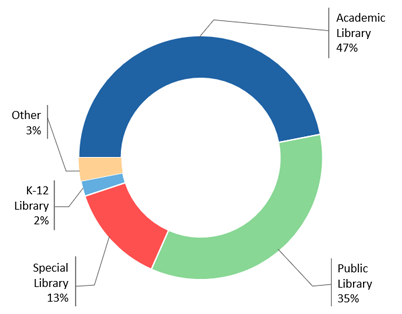
This survey reached a majority audience of academic (47%) and public (35%) libraries with the remainder hailing from special, K-12, or mixed libraries.
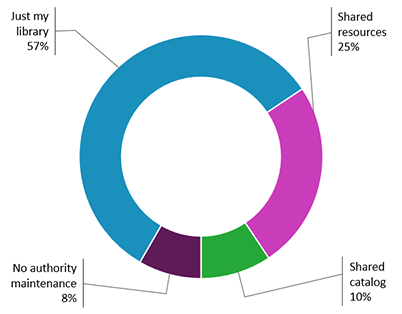
At 57%, more than half of these manage authority control alone, focusing on their own catalog. 25% reported that they share their catalog with a group of libraries. Nearly 10% maintain separate catalogs but use inter-staff collaboration and other resources as a group of libraries to further supplement their authority control work. Just 8% reported that, while headings may be authorized when records are created, there are no resources allocated to maintenance.
One respondent mentioned that in addition to NACO and SACO work being performed by the library, contributions to NAF and SAF from other libraries make up a big part of their workflow.
Authority Control Vendors
Do you work with an automated AC vendor or use the tools provided by your ILS? Both?
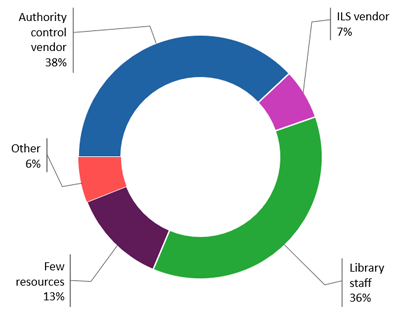
47% of libraries polled work with an automated AC vendor, chiefly Backstage Library Works. (The Library of Congress and OCLC were mentioned in a few comments regarding blended workflows.) 20% receive authority control processing from their ILS vendor, and 15% have their library staff performing the work manually. 7% indicated “other,” such as using a combination of manual and automated processing, for example. The remaining percentage reports that few resources are given to AC.
Please note that many librarians with whom Backstage currently works were included in the survey; as a result, we can expect the ratio of answers indicating standalone automation versus ILS to have a slight bias towards automation.
Future Record Enrichments
What patron-facing enrichments are you interested in applying to records in the next two years?
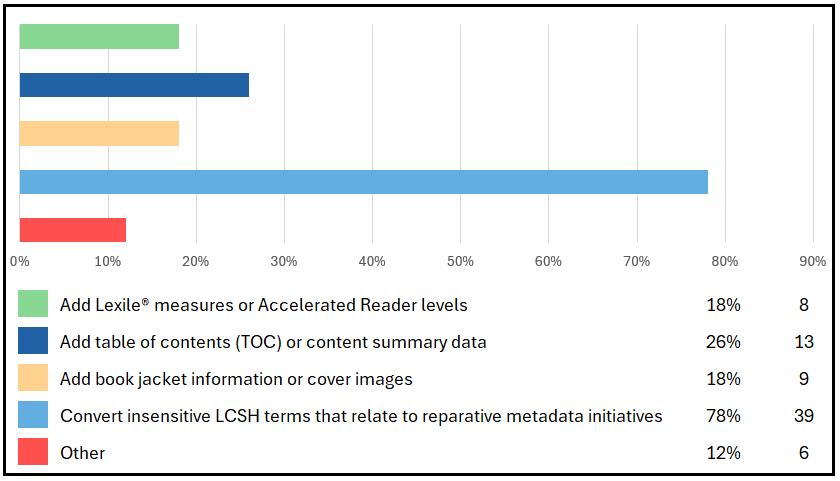
Respondents were able to select as many of these options as they desired or skip the question entirely. We find that reparative metadata initiatives continue to be top-of-mind for many libraries, followed by table of contents and summary data additions—in other words, enhancements that would make the catalog more widely discoverable by patrons.
What was mentioned under “other”?
- While some of these enrichments are already being added to library records, one respondent expressed plans to expand their scope.
- Meanwhile, another does not have funds to put towards these types of enrichments.
- Many comments focused on improved thesauri, particularly where they could be automatically provided by their ILS.
- Outside of this list, we saw mention of summaries for print materials, genre headings for fiction, non-MARC authority files, and Wikidata.
How about bibliographic enrichments?
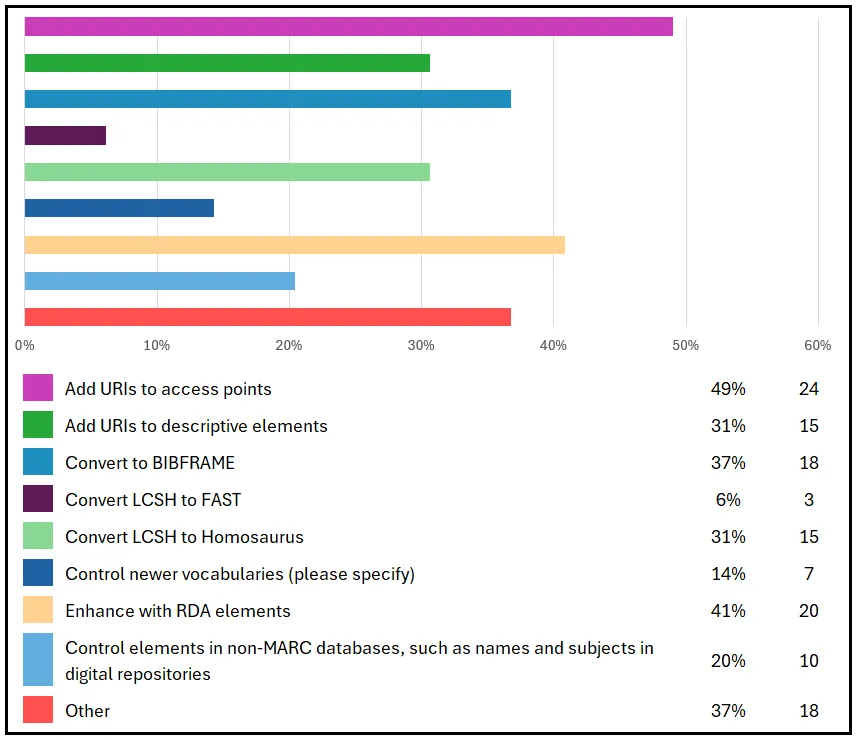
Comments indicated interest in specialized vocabularies like Homosaurus, RBMS Prejudicial Materials, LCMPT, and international headings. While interest in BIBFRAME continues, many libraries are still thinking in terms of RDA.
URI Sources & Linked Data
What URI sources for linked data do you plan to use?
The survey asked about the current use of Uniform Resource Identifiers, or URIs. Among the sources already being utilized, id.loc.gov ranked the highest at nearly 50%, followed by ISNI (28%) and VIAF (23%). ORCID, WikiData, and RDA Registry all came in at 18%.
Future indicators were strong for the same sources. Respondents indicated that they would like to use WikiData (33%), RDA Registry (23%), VIAF (18%), id.loc.gov (15%), and ORCID (15%). There is less current use and less interest in future use of DBpedia and LinkedGeoData.
The remainder of respondents either did not plan to use some, or all, of these sources, and a greater contingent had no opinion on the matter. However, it was noted in comments that the inability for some systems to meaningfully utilize linked data is one of the factors impacting interest.
Your Authority Control Approach
How satisfied are you with your present AC approach?
Of the 87 respondents who offered an opinion on this question, 71 (82%) expressed satisfaction with their library’s current approach to authority control. 29 (33%) of those were very satisfied, largely among those who partner with an automated authority control vendor. Librarians relying on their ILS for authority control were likely to be generally satisfied with that approach.
16 (18%) were dissatisfied with their library’s approach—8 of whom were very dissatisfied, and in nearly all of these instances, one of three things is true, based on correlated responses:
- The current technical infrastructure at the library is an obstacle to completing authority control work.
- The library staff are responsible for doing the authority work themselves.
- The library allocates little or no budget towards authority control.
It is important to note that just over half of libraries managing their own authority control were satisfied or very satisfied with their library’s approach. What makes the difference between satisfactory and dissatisfactory local management of authority control? There may be differences as to the libraries’ catalog size, staffing, or the ability and funding to access outside tools that could assist with specific operations.
How have things changed in the last decade?
In 2016, for as many libraries that worked with vendors, there were almost as many performing authority work solely through the efforts of their librarians. Today, more libraries are making use of automated vendors and the tools provided by their ILS. That said, several respondents described a collaborative process where the ILS report informs the adjustments that staff will link manually.
Enriching records with table of contents or content summaries was about as popular in 2016 as it is today. There was a greater interest in incorporating URIs, and it is likely that the delays inhibiting their fuller adoption are part of what may have reduced the drive towards linked data in 2026.
Are you interested in learning more about the survey or seeing more specific reports? Please reach out to us at 1.800.288.1265 or send an email to info@bslw.com.